Complete Guide to Swimming Pool Cleaning
Maintaining a swimming pool in peak condition requires far more than occasionally throwing in chlorine or pulling out floating leaves. A pristine pool is the outcome of a methodical cleaning protocol that combines physical surface detailing, hydrodynamic filtration, and precise chemical balancing. Neglecting any one of these pillars inevitably leads to stubborn algae blooms, cloudy water, and costly equipment wear. At Pratyaksh Pool Care, we have developed this comprehensive, professional-grade guide to walking facility managers and pool owners through an end-to-end cleaning routine that guarantees immaculate hygiene, swimmer safety, and sparkling clarity.
Phase 1: Pre-Cleaning Chemical & Water Balance Audit
Before deploying vacuum heads or brushing pool plaster, you must assess the chemical equilibrium of the water. Sanitizers and clarifiers cannot function effectively in unbalanced water.
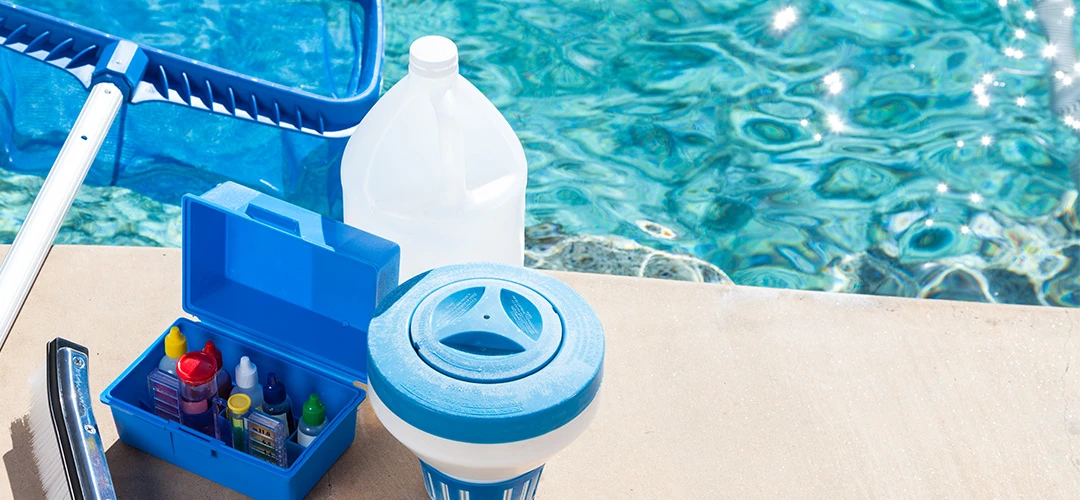
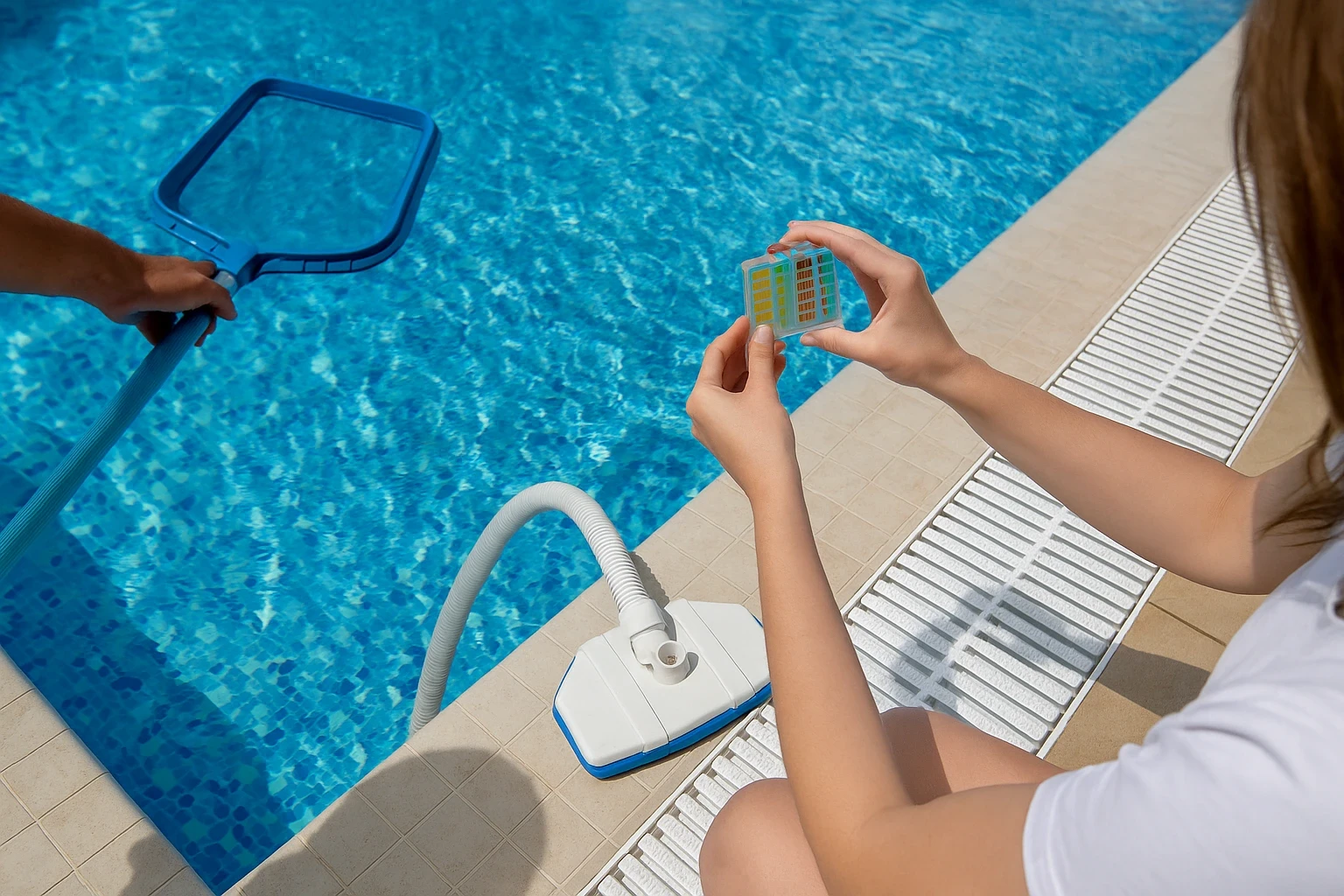
Test Key Baseline Parameters: Use a professional liquid comparator or digital photometer to test pH, Free Available Chlorine (FAC), and Total Alkalinity (TA).
Establish the pH Anchor (7.2 – 7.6): Chlorine efficacy plummets if pH drifts high; at a pH of 8.0, chlorine is less than 20% effective. Conversely, a pH below 7.2 creates acidic water that etches grout and irritates eyes. Use pH Reducer or pH Increaser from Pratyaksh Pool Care to balance the water prior to cleaning.
Check Total Alkalinity (80 – 120 ppm): Ensuring total alkalinity is balanced prevents sudden pH bounce during subsequent chemical shocks.
Phase 2: Surface Skimming & Perimeter Prep
Physical debris must be cleared systematically from top to bottom so that settled particles can be collected in a single vacuuming pass.
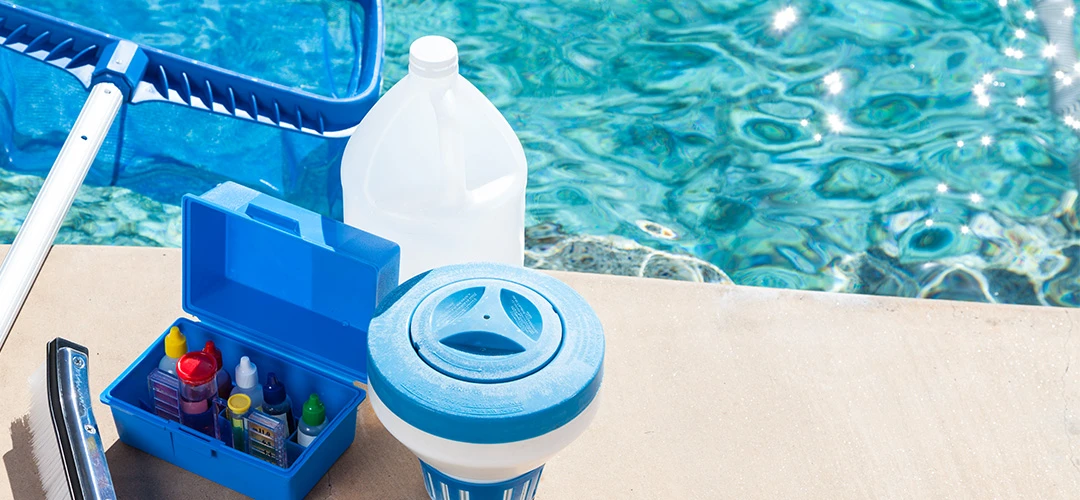
Deep-Pocket Surface Raking: Using an industrial telescopic pole and heavy-duty deep-pocket leaf rake from Pratyaksh Pool Care, clear all floating leaves, twigs, insects, and windblown organic dust.
Empty Skimmer and Pump Strainer Baskets: Clear debris from all skimmer baskets and the pump hair-and-lint pot before starting circulation. Restricted baskets cause pump cavitation and starve the impeller of water.
Scrub the Waterline Tile Band: Sunscreens, body oils, and pollen form a stubborn organic ring along the waterline tile band. Use a non-abrasive pool scrub pad with an enzyme tile cleaner to break down this line without scratching delicate ceramics or mosaic finishes.
Phase 3: Structural Brushing to Dislodge Biofilm
Microscopic algae spores and bacterial biofilms anchor tenaciously into porous grout lines, ladder mounting cups, step crevices, and underwater light niches where circulation is weak.
Systematic Wall-to-Floor Brushing: Brush from the shallow end towards the deep end, forcing dislodged particulate matter toward the bottom main drains.
Brush Selection by Surface Type: For gunite, plaster, and tiled pools, use a stainless-steel or hybrid wire brush. For vinyl-lined, fiberglass, or painted pools, use a stiff nylon bristle brush supplied by Pratyaksh Pool Care to prevent tearing or scratching surface coatings.
Detailing Shadow Zones: Pay particular attention to under-step curves, behind removable stainless steel ladders, and around skimmer throat openings.
Phase 4: Floor Vacuuming: Manual Suction vs. Robotic Automation
Once brushed particles settle to the bottom floor, mechanical extraction eliminates organic sludge before it decomposes into ammonia compounds.
Manual Vacuuming via Dedicated Suction Line: Connect a flexible, multi-wheeled vacuum head to an airtight, UV-resistant spiral floating hose. Prime the hose completely with water to purge air pockets before connecting to the vacuum suction port or skimmer plate to avoid air-locking the pump. Move in slow, overlapping linear strokes to prevent stirring up settled dust.
Automated Robotic Cleaning: For daily maintenance, deploy an autonomous robotic pool cleaner from Pratyaksh Pool Care. Operating independently of the pool's central plumbing, robotic cleaners collect debris in internal fine-mesh canisters, saving energy and preserving filter media capacity.
Vacuuming to Waste (Severe Algae Outbreaks): If remediating a heavy green algae bloom or settled flocculant, set your multiport valve to Waste. This bypasses the sand filter completely and discharges heavy sediment directly into drainage, preventing filter bed contamination.
Phase 5: Filtration System Cleansing (Backwash & Rinse)
Physical brushing and vacuuming transfer heavy particulate loads into your filter tank. Cleaning the filter immediately after a deep clean prevents pressure spikes and pump strain.
Shut Down the Circulation Pump: Never rotate a multiport valve handle while the pump is running to avoid blowing out internal spider gaskets.
Execute Backwash (2–3 Minutes): Turn the 6-way multiport valve to Backwash. Turn on the pump and monitor the clear sight glass until the discharged waste water runs clear.
Execute Rinse (30–45 Seconds): Turn off the pump, select Rinse, and run the pump briefly. This reseats the graded silica sand or active glass media bed and flushes residual silt out the waste line rather than blowing it back into the clean pool.
Return to Filter Mode: Switch back to Filter and verify that the tank pressure gauge returns to its clean baseline level (typically 10–15 PSI).
Phase 6: Sanitizing, Shocking & Sustained Circulation
With physical dirt removed and filtration restored, chemical sanitization sterilizes suspended bacteria and prevents micro-spore regrowth.
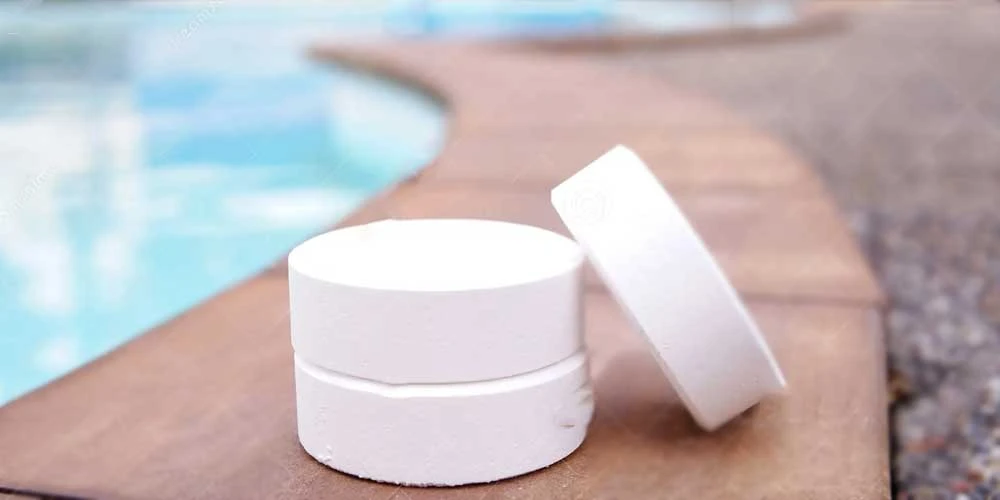
Replenish Slow-Dissolving TCCA 90%: Load your in-line chemical erosion feeder, floating dispenser, or skimmer basket with high-purity 200g TCCA 90% tablets sourced from Pratyaksh Pool Care to maintain a steady 1.5 to 3.0 ppm free chlorine residual.
Weekly Superchlorination (Shock Treatment): Shock the pool in the evening using granular chlorine or shock oxidizer dissolved in a bucket of water. Evening dosing ensures that UV rays do not degrade free hypochlorous acid before it can oxidize chloramines and bather waste.
Conclusion: Maintain Total Pool Health with Pratyaksh Pool Care
A consistent, step-by-step cleaning routine preserves structural pool surfaces, extends the working life of circulation pumps and filters, and drastically lowers total chemical consumption over time. Whether you need heavy-duty maintenance accessories, robotic vacuum units, multi-media filters, or premium TCCA 90% sanitizing chemicals, Pratyaksh Pool Care is your trusted partner for high-performance commercial and residential swimming pool solutions. Equip your pool facility with professional-grade gear and enjoy spotless, inviting water every day of the year.